
Most guides say planning fees are non-refundable, full stop, and leave it there. That’s true in the most common scenario, but it isn’t the whole picture. There’s a specific legal right built directly into the regulations that entitles you to a full refund if your council takes too long to decide, and a real court case shows exactly how that right can be accidentally signed away.
The default position
Once an application has been validated, meaning the council has confirmed it’s complete and correctly accompanied by the right fee, that fee is not refundable. It doesn’t matter whether the application is later refused, withdrawn by the applicant, or anything in between. You’re paying for the application to be properly assessed, not for a particular outcome, and that principle holds regardless of how the process ends once validation has happened.
Where a refund genuinely does apply
An application that never becomes valid
If your application is rejected at validation stage, missing information, incorrect documents, and the issues aren’t resolved within the timeframe the council allows, the application is returned as invalid rather than assessed. In this situation, the fee is refunded, though most councils deduct an administrative charge first to cover the work already done reviewing what was submitted. The exact admin charge varies by council rather than being set nationally, so it’s worth checking your specific authority’s policy rather than assuming a fixed figure.
Non-determination, the right almost nobody knows about
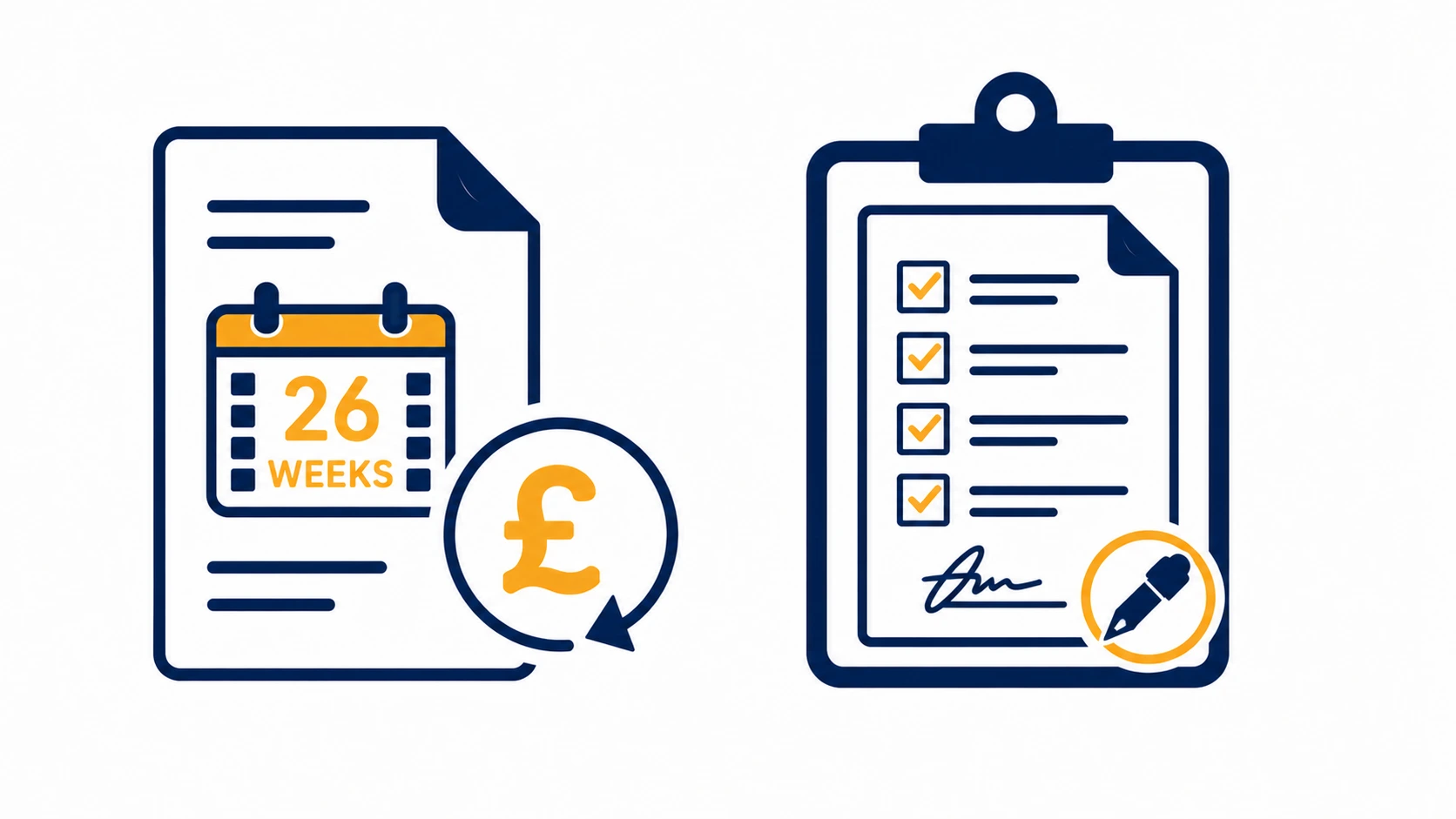
Under regulation 9A of the 2012 Fees Regulations, sometimes referred to informally as the Planning Guarantee, a fee must be refunded in full if the local planning authority fails to determine a valid application within 26 weeks of receiving it. This applies to planning permission applications, permission in principle, and approval of reserved matters. It’s a genuine statutory entitlement, not a discretionary gesture from a helpful council officer, and it exists specifically to give applicants some recourse against genuinely excessive delay.
How this right can be quietly given away
A 2018 High Court case, Provectus Remediation v Derbyshire County Council, tested exactly what happens when an applicant and council agree in writing to extend the determination period beyond the standard timeframe. The court found that once such an extension is agreed, the 26-week refund right doesn’t apply, even if the council goes on to miss that longer, agreed deadline too. In that specific case, an application involving a fee of nearly £45,000 was ultimately not refunded, because the extension agreement itself removed the statutory right that would otherwise have applied. Agreeing to “just a bit more time” with a council, in writing, can mean signing away a right you didn’t realise you had.
A distinct, narrower category: deemed applications
A separate refund provision under regulation 10 covers deemed planning applications, a specific category connected to enforcement notices, rather than standard applications. Refunds here apply in situations like an enforcement notice being withdrawn, or a related appeal being withdrawn a set number of days before a hearing. This is a narrower, more specialist scenario than most applicants will ever encounter, but worth knowing it exists as its own separate mechanism from the two more common situations above.
What a refund is not
It’s worth being clear about what doesn’t count as a refund, since the terms get confused. The free resubmission rule, allowing an identical application to be resubmitted within 12 months of a refusal without paying the fee again, isn’t a refund of the original fee. It’s a waiver on a subsequent, separate application. Our free resubmission guide covers that mechanism in full, and it’s genuinely useful, but it operates on a different principle from anything covered on this page.
A worked comparison
An applicant submits a full planning application, validated correctly, with a fee of £4,880 for an 8-dwelling scheme.
Scenario one: the council determines the application, refused, within 20 weeks. No refund applies; the fee was paid for determination, which happened.
Scenario two: 26 weeks pass with no determination, and no extension was ever agreed in writing. The full £4,880 is refundable under regulation 9A.
Scenario three: at week 20, the applicant and council agree in writing to extend the determination period by a further 8 weeks. The council still hasn’t decided by week 28. Because that extension was formally agreed, the 26-week refund right no longer applies, per the Provectus judgment, even though more than 26 weeks have now genuinely passed.
Why this is worth understanding before, not after
The gap between these scenarios is substantial, tens of thousands of pounds on a large scheme, and it hinges on a single decision made partway through the process: whether to agree to an extension in writing. Anyone facing a slow-moving application, and being asked to agree to more time, is worth pausing on that request specifically, rather than treating it as a routine formality.
For the official regulations governing refunds, see Gov.uk: Fees for planning applications.
Working out what your application should have cost in the first place? Use the calculator to confirm the correct fee before you submit.