
Full or Outline Planning Permission: How the Fees Differ
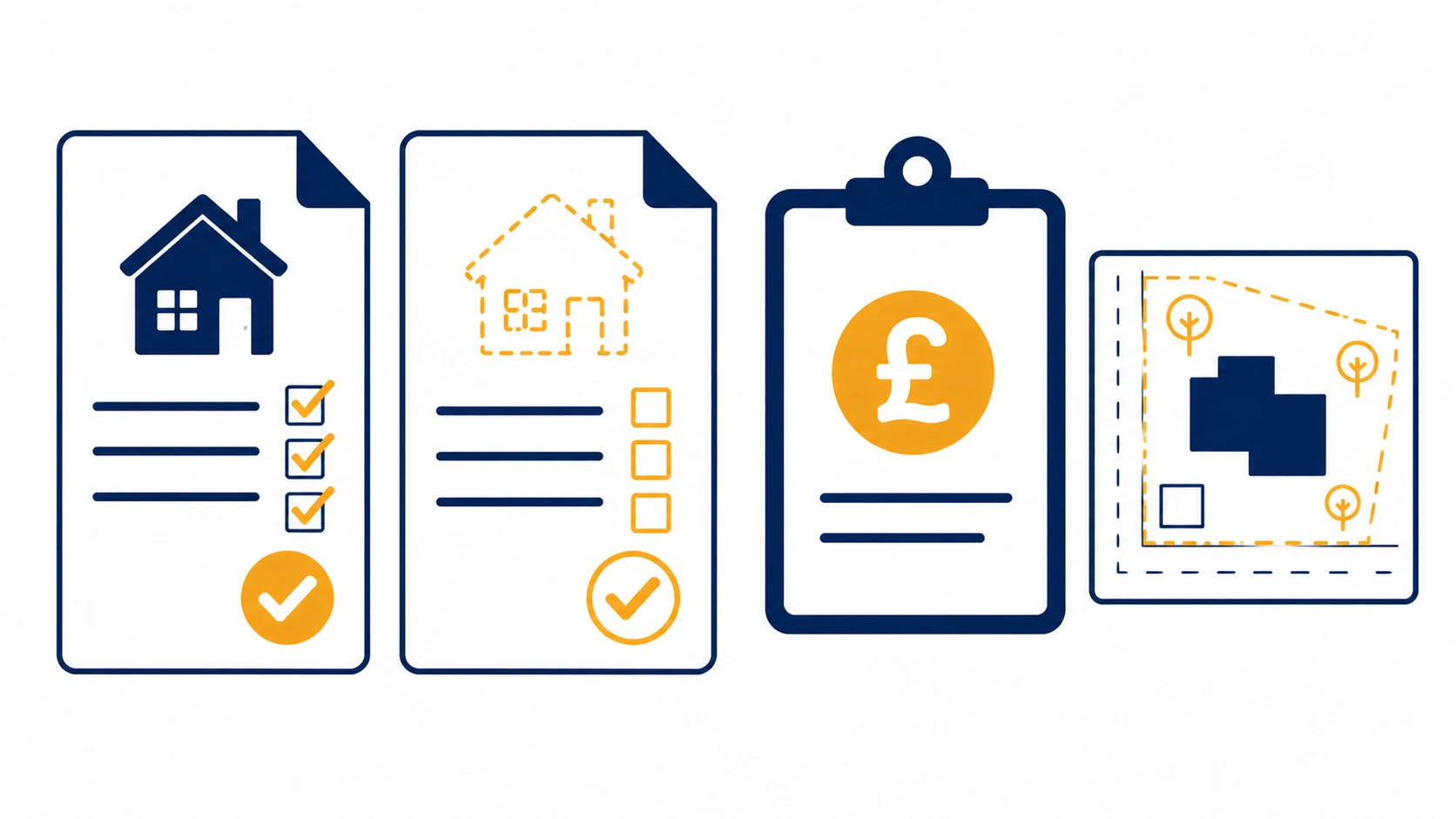
Full and outline planning applications answer different questions, so their fees are calculated differently. A full application asks the council to decide a detailed proposal. An outline application asks whether development is acceptable in principle before all design details are fixed.
How a full application is charged
The fee for a full application depends on the development category. A housing scheme is generally charged by dwelling. A non-residential scheme may be charged by floorspace, while some applications have a fixed fee.
How an outline application is charged
Outline applications are generally calculated by site area and the type of development proposed. The relevant band is applied to each 0.1 hectare or part of 0.1 hectare, subject to the limits and caps in the regulations.
The category matters. An outline proposal for houses is not necessarily calculated in the same way as an outline proposal for other buildings or mixed development. The council determines the applicable category from the proposal.
What happens after outline permission?
If outline permission is granted, the details reserved from the outline decision are submitted through a Reserved Matters application. That is a second stage with its own fee rules. Choosing outline permission therefore does not automatically reduce the total cost of the planning process.
Which route is suitable?
Outline permission can be useful when a site’s principle is important but the final design is not ready. Full permission may be more appropriate when the scheme is sufficiently developed and you want one decision on the complete proposal. The right choice depends on the project, not just the fee.
Use the calculator for an estimate, and confirm the proposed route with the council before submitting.
Source trail: GOV.UK planning fee guidance. For the wider project budget and non-statutory costs, see the total-cost guide.
The decision is not only about price
A full application asks the authority to decide the detailed proposal. An outline application can reserve matters for a later stage, so the fee comparison should be read alongside what information is being submitted and what will still need to be approved.
Questions for an applicant
- Which matters are being reserved?
- Will the next stage require reserved-matters approval?
- Has the site-area or dwelling-count band been applied correctly?
- Does the project include mixed uses that need careful categorisation?
Record the assumptions
Save the site area, dwelling count, route selected, and source date alongside the result. If the proposal changes, recalculate rather than relying on a previous figure. The calculator guide explains the units and caps used by the tool.
Compare the stages, not just the labels
Before selecting a route, write two sentences: “The authority is being asked to decide…” and “The matters that remain for a later stage are…”. If the second sentence is empty, an outline route may not describe the intended submission. If important details are being reserved, record them so the later reserved-matters stage is not forgotten in the budget.
Fee-record worksheet
- Application route and date checked.
- Number of proposed homes or site area used.
- Matters submitted now and matters reserved.
- Any previous fee paid and the application reference.
- Expected later applications and professional work.
This worksheet turns a one-time calculator result into an auditable project record.
Source trail
Check the GOV.UK fee guidance and the statutory regulations before fixing the budget.
A simple comparison example
Suppose a small housing scheme proposes twelve homes. A full application asks the authority to decide the detailed scheme now. An outline application may leave selected matters for a later reserved-matters stage. The useful comparison is therefore not “which button gives the lower number?” It is “which decisions are being paid for now, and what later application and professional work will still be needed?” Record the dwelling count, the matters reserved, the site area, and any earlier fee before comparing the two routes.
Common mistakes
- Assuming outline permission avoids the cost of the later reserved-matters application.
- Using a dwelling count from an early sketch after the proposal has changed.
- Calling an application outline when the authority is being asked to decide detailed matters.
- Comparing a statutory fee with a consultant’s full project quote.
If the route is uncertain, ask the Local Planning Authority to confirm how the proposal should be described before paying.