
Prior Approval Fees in England: What You Pay and Why
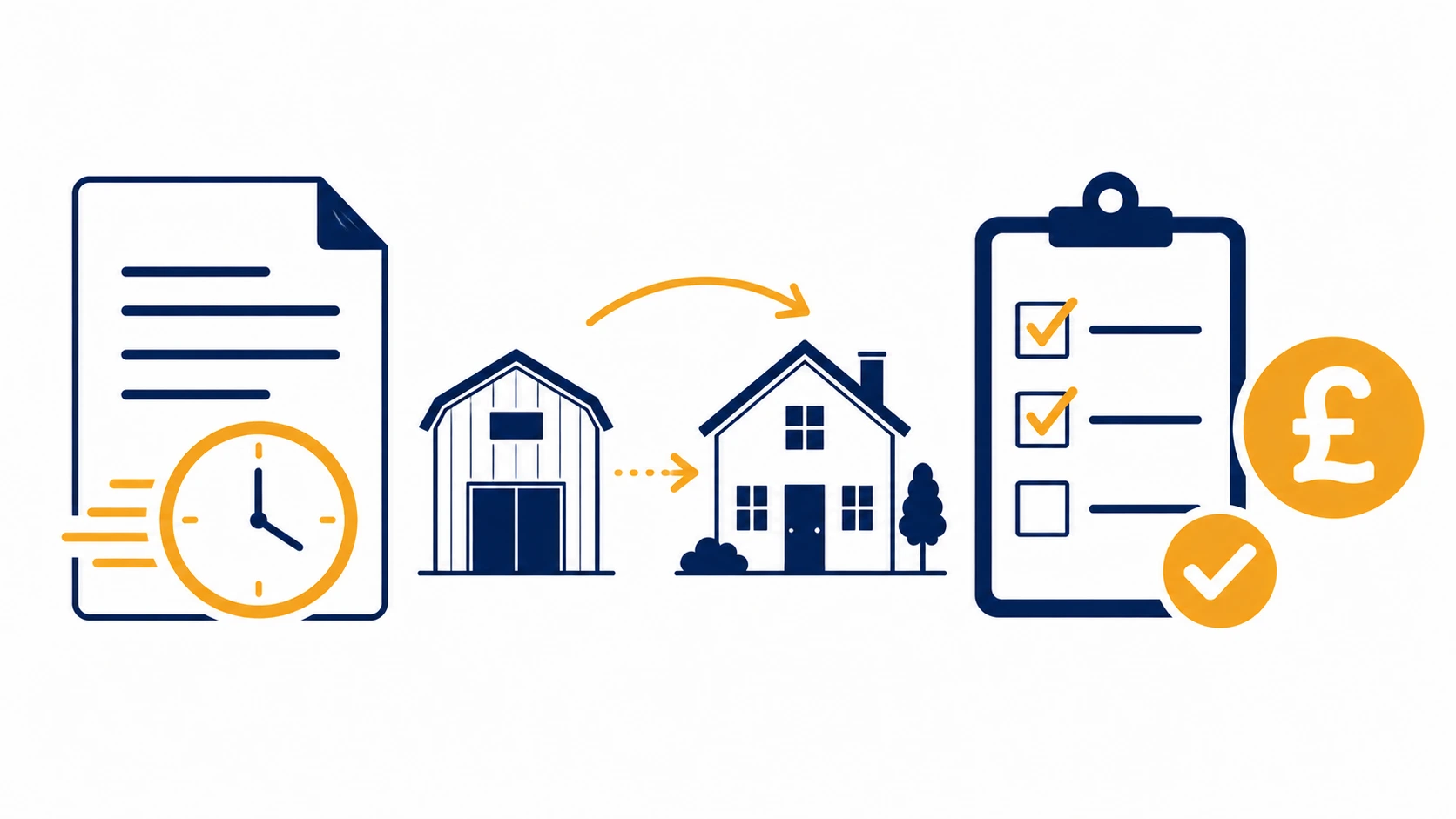
Prior approval is a process used for specific permitted development rights. The right may allow a type of development in principle, but the council still has to consider particular matters such as transport, flooding, or design. The fee depends on the permitted-development class.
Common examples
A larger rear extension has a fixed fee of £249 from 1 April 2026. Some changes from commercial use to homes are charged per dwelling, and other classes have a different amount where building operations are included. The category selected in the application matters more than the general description of the project.
Prior approval is not the same as full permission
The council is not deciding every planning issue in the same way as it would for a full application. It considers the matters specified by the relevant permitted-development right. If the proposal does not meet the underlying conditions, prior approval may not be the correct route.
Check the class before calculating
Before relying on a fee, identify the permitted-development class and read its conditions. A change from a shop, office, or other commercial use may have different rules from a householder extension. Building work can also change the applicable fee.
Timing and outcome
Prior approval procedures often have a statutory decision period, but the exact process depends on the class and the information submitted. A failure to provide the required information can affect validation and the council’s ability to consider the application.
Choose the relevant prior-approval option in the calculator, then confirm the class and fee with the council.
Source trail: GOV.UK planning fee guidance. For the wider project budget and non-statutory costs, see the total-cost guide.
Why the permitted-development class matters
“Prior approval” is not one universal fee. The charge depends on the specific permitted-development class and on what the proposal includes. A commercial-to-residential change, a larger home extension, and a change involving building operations should not be treated as interchangeable.
Information to record
- The exact GPDO class or route relied on.
- The number of dwellinghouses created, where the fee is per dwelling.
- Whether building operations form part of the proposal.
- Whether the authority’s current guidance describes a different fee category.
Use the calculator only after recording those facts. If the class is unclear, ask the authority before payment rather than choosing the lowest visible rate.
Outcome and limitation
A fee estimate does not predict whether prior approval will be required, granted, refused, or subject to conditions. Those are separate planning decisions.
Evidence checklist before selecting a rate
Keep the permitted-development class, existing use, proposed use, number of homes, and a note about building operations together. If the proposal relies on a class with conditions or limitations, record how the facts fit those requirements. The fee estimate should follow that classification work, not replace it.
Why a low estimate can be misleading
Two proposals can both be described informally as “converting a building to homes” while using different statutory routes. A larger rear extension, a commercial-to-residential change, and a change that includes building operations can have different inputs. If the route is uncertain, a lower number is not a safe default.
Source trail
Check the current GOV.UK fee guidance, the permission guidance, and the current permitted-development order.
A route-check example
Consider a building being changed from a commercial use to homes. The useful starting record is the existing use, the intended number of homes, the permitted-development class being relied on, and whether physical building operations are included. Those details can point to a different fee route from a larger home extension or a full planning application. The calculator can show a fee once the route is selected; it cannot decide whether the class applies.
Common mistakes
- Using “prior approval” as if it were one universal application type.
- Choosing a rate before checking the permitted-development class.
- Assuming a prior-approval fee predicts whether the authority will grant it.
- Ignoring the cost of plans, reports, or paid pre-application advice.
Save the class, existing use, proposed use, dwelling count, and source date with the estimate. That record makes it easier to correct the fee if the proposal changes.